Concrete Batching Plant Maintenance Checklist
The stable operation of a concrete batching plant relies on standardized, periodic maintenance inspections. A scientifically designed concrete batching plant maintenance checklist effectively reduces equipment failure rates, extends the service life of the machinery, and ensures production precision and operational safety. Based on industry O&M standards and practical engineering experience, maintenance inspections of concrete batching plant are categorized into four tiers—daily patrols, weekly checks, monthly maintenance, and quarterly/annual overhauls—each with specific inspection items and quantitative technical standards covering key nodes across all equipment systems.
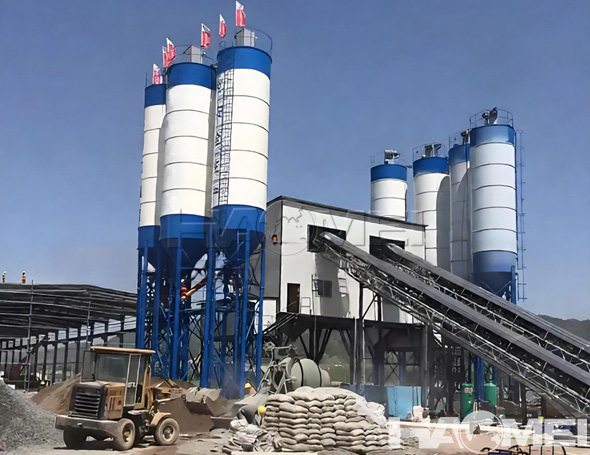
Weekly checks are in-depth preventive inspections focusing on component conditions and functional integrity. Regarding drive components, the temperature rise of screw conveyor hanger bearings is monitored (normal rise ≤40°C), and gearbox oil quality is inspected for signs of emulsification or sediment. For powder and pneumatic systems, the air pressure for powder silo arch-breaking systems is tested and maintained at a stable 0.4–0.6 MPa, and the operating pressure differential of the pulse dust collection system is checked (normal value ≤1200 Pa; filter bags must be cleaned or replaced if the limit is exceeded). Regarding fasteners, anchor bolts and flange connection bolts on the main unit are retightened to ensure there is no looseness, stripped threading, or corrosion.
Monthly maintenance involves comprehensive performance calibration, focusing on wear control and precision verification. Regarding wear components, inspect the wear levels of mixing blades and liners; replacement is mandatory if wear exceeds one-third of the original thickness. Check belt tension, ensuring no-load sag is controlled at 10–15 mm per meter of belt width to prevent slippage or damage from excessive tightness. For metering calibration, perform static checks on all metering units using standard weights to correct system deviations, and verify the output accuracy of admixture pumps and pipeline sealing integrity. In the electrical system, tighten all terminals and ensure motor insulation resistance is ≥0.5 MΩ; also, verify the data transmission stability of the central control system and the accuracy of sensor signals.
Quarterly and annual overhauls aim to restore overall machine performance, focusing on core components and structural safety. Regarding the lubrication system, replace the specialized industrial gear oil in the main mixer gearbox—the first change occurs after 500 hours of operation, with subsequent changes every 2,000 hours—and replenish bearings with the appropriate grade of grease. Structurally and regarding safety, verify the pressure relief valves on powder silos to ensure accurate opening pressure; inspect the anti-corrosion coating thickness on the steel structure (ensuring it is ≥80 μm) and touch up damaged areas; and calibrate the machine's foundation levelness, ensuring settlement deviation is ≤2 mm/m.
Industry experience shows that most metering deviation faults stem from daily zero-calibration procedures becoming mere formalities; it is recommended to mandate the zero-calibration process before each production shift and maintain records. For overseas projects, due to long spare-parts supply chains, it is advisable to stock up on wear parts based on a 3–6 month wear cycle to avoid project losses caused by unplanned downtime.
This resource is from: https://www.concrete-mix-plant.com/news/concrete-batching-plant-maintenance-checklist.html
Should you be interested in, please contact us at:
Haomei Machinery Equipment Co.,ltd
Whatsapp/Wechat: 0086 181 3788 9531
Email: nydia@concretebatchplant24.com


评论
发表评论