Concrete Batching Plant Inspection Checklist
Daily inspections of concrete batching plants cannot be random "check wherever you think of it" inspections, nor can they be limited to simple daily, weekly, and monthly time divisions. A professional inspection system should be tiered according to risk level and inspection depth, taking into account the three core dimensions of inherent safety, measurement accuracy, and structural reliability. The following outlines core concrete batching plant checklist at four levels: pre-shift inspection, weekly verification, monthly in-depth maintenance, and seasonal special inspections, covering all dimensions of control from operational status to structural safety, helping the concrete batch plant establish a quantifiable equipment health baseline.
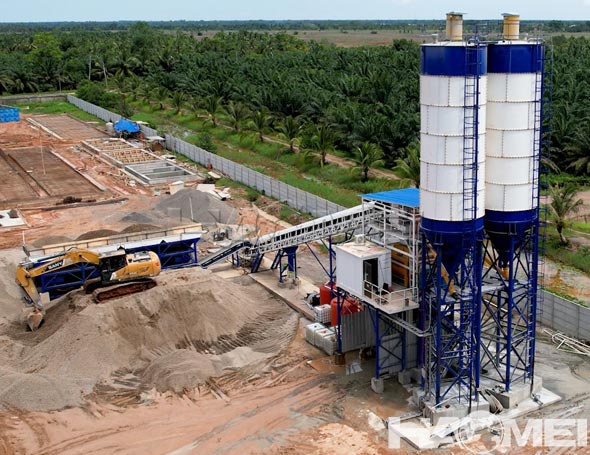
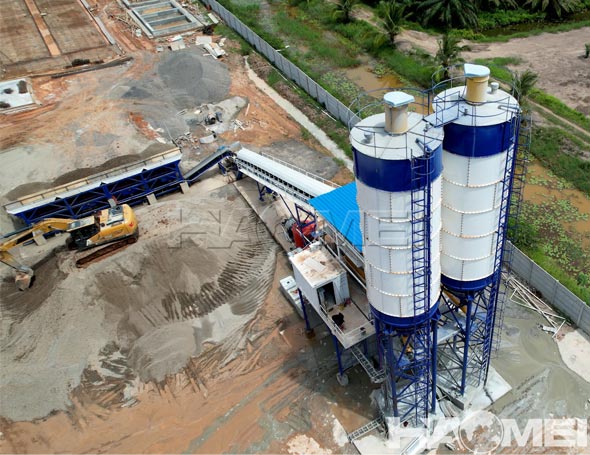
Pre-shift inspection is a mandatory safety confirmation before daily startup, focusing on identifying immediate fault risks.
Regarding the mixing unit, observe the grease seepage status of the floating seal at the shaft end. Continuous, slight oil seepage indicates normal lubrication; however, if cement mortar seepage occurs, it indicates seal failure, and starting the machine with a fault is strictly prohibited. Simultaneously check the thickness of residual solidified material inside the drum, the stroke of the hydraulic cylinder of the discharge gate, and the integrity of the sealing strip.
The metering system must confirm that the zero-point drift of each weighing hopper under no-load conditions does not exceed 0.2% of the rated weighing capacity, that there is no clumping or bridging in the flexible connections, and that the weighing body has no additional jamming.
For the pneumatic system, check that the working pressure of the air tank is maintained between 0.5 and 0.7 MPa, and open the drain valve of the oil-water separator to drain the condensate. Furthermore, the loading limit switches, emergency stop circuits, and fault alarm devices must be tested and triggered every shift; these are the most easily overlooked but critical items directly related to safety.
Weekly functional checks focus on metering accuracy and the working condition of transmission components to prevent the accumulation of hidden deviations from affecting concrete quality. Metering accuracy is the core of the check: using third-class standard weights, perform three-point off-center load tests and 50% and 100% range linear calibrations on the powder and water-based scales to ensure that the powder metering error is ≤±1% and that of water and admixtures is ≤±0.5%; for the aggregate belt scale, verify the pulse equivalent of the speed sensor and check the radial runout of the weighing rollers. The mixing unit's inspection door is opened, and a thickness gauge is used to randomly check the remaining thickness of the blades and liners. High-chromium alloy liners worn to 1/3 of their original thickness require replacement; the wear rate is recorded to estimate remaining lifespan. In the conveyor system, the temperature rise of the hanger bearings in the screw conveyor is checked to ensure it does not exceed 40°C above ambient temperature. The belt conveyor tension stroke is adjusted to control the unloaded side sag to 1%~1.5% of the belt width, and the rotational flexibility of each idler roller is checked. The centralized lubrication system is checked point by point for oil flow, and any blocked distributor branches are cleared.
Monthly in-depth maintenance focuses on structural reliability and electrical system integrity, falling under the category of preventative management. For the steel structure, magnetic particle inspection is used to check critical welds subjected to impact loads. The torque value of high-strength bolts is re-tightened, and the overall verticality deviation of the silo is re-measured to be ≤1.5‰. Signs of uneven foundation settlement are investigated. After the electrical system is powered off and cleaned, all power circuit terminals are tightened, and the insulation resistance of the motor windings is tested with a megohmmeter to be ≥0.5MΩ. The grounding resistance of the entire station's grounding grid is verified to be ≤4Ω. The control cabinet's cooling ducts are cleaned, and the contactor contact erosion is checked. The dust removal system underwent inspection to check the integrity of the membrane filter cartridges, and the pulse valve blowing pressure was tested at 0.4~0.6MPa. The dust cleaning interval sequence was calibrated. Simultaneously, samples were taken to test the kinematic viscosity and iron content of the lubricating oil in each gearbox, and an oil change plan was developed based on operating hours.
Seasonal inspections are often overlooked, yet they can prevent numerous seasonal failures. Before the rainy season, the protection sealing performance of all outdoor electrical cabinets was checked, and the breather valves on silo tops, drainage ditches in the material yard, and foundation water collection wells were cleared to prevent powder from becoming damp and clumping, and foundation water accumulation and settling. Before winter, the electric heat tracing insulation layer of admixtures and water supply pipelines was tested, the daily drainage frequency of air compressors was increased, and the hydraulic system was replaced with hydraulic oil of a grade suitable for low temperatures to avoid excessive viscosity causing sluggish actuator operation.
Finally, the value of the concrete batching plant checklist lies in data tracking. Each inspection records quantitative data such as wear thickness, error value, and temperature rise, rather than simply checking off items. Long-term accumulated trend data forms the equipment's health record, allowing for accurate prediction of the replacement cycle of vulnerable parts and eliminating failures in their early stages.
Pre-shift inspection is a mandatory safety confirmation before daily startup, focusing on identifying immediate fault risks.
Regarding the mixing unit, observe the grease seepage status of the floating seal at the shaft end. Continuous, slight oil seepage indicates normal lubrication; however, if cement mortar seepage occurs, it indicates seal failure, and starting the machine with a fault is strictly prohibited. Simultaneously check the thickness of residual solidified material inside the drum, the stroke of the hydraulic cylinder of the discharge gate, and the integrity of the sealing strip.
The metering system must confirm that the zero-point drift of each weighing hopper under no-load conditions does not exceed 0.2% of the rated weighing capacity, that there is no clumping or bridging in the flexible connections, and that the weighing body has no additional jamming.
For the pneumatic system, check that the working pressure of the air tank is maintained between 0.5 and 0.7 MPa, and open the drain valve of the oil-water separator to drain the condensate. Furthermore, the loading limit switches, emergency stop circuits, and fault alarm devices must be tested and triggered every shift; these are the most easily overlooked but critical items directly related to safety.
Weekly functional checks focus on metering accuracy and the working condition of transmission components to prevent the accumulation of hidden deviations from affecting concrete quality. Metering accuracy is the core of the check: using third-class standard weights, perform three-point off-center load tests and 50% and 100% range linear calibrations on the powder and water-based scales to ensure that the powder metering error is ≤±1% and that of water and admixtures is ≤±0.5%; for the aggregate belt scale, verify the pulse equivalent of the speed sensor and check the radial runout of the weighing rollers. The mixing unit's inspection door is opened, and a thickness gauge is used to randomly check the remaining thickness of the blades and liners. High-chromium alloy liners worn to 1/3 of their original thickness require replacement; the wear rate is recorded to estimate remaining lifespan. In the conveyor system, the temperature rise of the hanger bearings in the screw conveyor is checked to ensure it does not exceed 40°C above ambient temperature. The belt conveyor tension stroke is adjusted to control the unloaded side sag to 1%~1.5% of the belt width, and the rotational flexibility of each idler roller is checked. The centralized lubrication system is checked point by point for oil flow, and any blocked distributor branches are cleared.
Monthly in-depth maintenance focuses on structural reliability and electrical system integrity, falling under the category of preventative management. For the steel structure, magnetic particle inspection is used to check critical welds subjected to impact loads. The torque value of high-strength bolts is re-tightened, and the overall verticality deviation of the silo is re-measured to be ≤1.5‰. Signs of uneven foundation settlement are investigated. After the electrical system is powered off and cleaned, all power circuit terminals are tightened, and the insulation resistance of the motor windings is tested with a megohmmeter to be ≥0.5MΩ. The grounding resistance of the entire station's grounding grid is verified to be ≤4Ω. The control cabinet's cooling ducts are cleaned, and the contactor contact erosion is checked. The dust removal system underwent inspection to check the integrity of the membrane filter cartridges, and the pulse valve blowing pressure was tested at 0.4~0.6MPa. The dust cleaning interval sequence was calibrated. Simultaneously, samples were taken to test the kinematic viscosity and iron content of the lubricating oil in each gearbox, and an oil change plan was developed based on operating hours.
Seasonal inspections are often overlooked, yet they can prevent numerous seasonal failures. Before the rainy season, the protection sealing performance of all outdoor electrical cabinets was checked, and the breather valves on silo tops, drainage ditches in the material yard, and foundation water collection wells were cleared to prevent powder from becoming damp and clumping, and foundation water accumulation and settling. Before winter, the electric heat tracing insulation layer of admixtures and water supply pipelines was tested, the daily drainage frequency of air compressors was increased, and the hydraulic system was replaced with hydraulic oil of a grade suitable for low temperatures to avoid excessive viscosity causing sluggish actuator operation.
Finally, the value of the concrete batching plant checklist lies in data tracking. Each inspection records quantitative data such as wear thickness, error value, and temperature rise, rather than simply checking off items. Long-term accumulated trend data forms the equipment's health record, allowing for accurate prediction of the replacement cycle of vulnerable parts and eliminating failures in their early stages.
This resource is from: https://www.concrete-mix-plant.com/news/concrete-batching-plant-inspection-checklist.html
Should you be interested in, please contact us at:
Haomei Machinery Equipment Co.,ltd
Whatsapp/Wechat: 0086 181 3788 9531
Email: nydia@concretebatchplant24.com
Should you be interested in, please contact us at:
Haomei Machinery Equipment Co.,ltd
Whatsapp/Wechat: 0086 181 3788 9531
Email: nydia@concretebatchplant24.com


评论
发表评论